


March 29, 2017
BTK President Dr. Ömer Fatih Sayan, speaking at the Ordinary General Assembly Meeting of the Access Providers Association for 2016, said, “We should not only use technology but also produce it. At this point, our principle is to support and develop domestic production.”
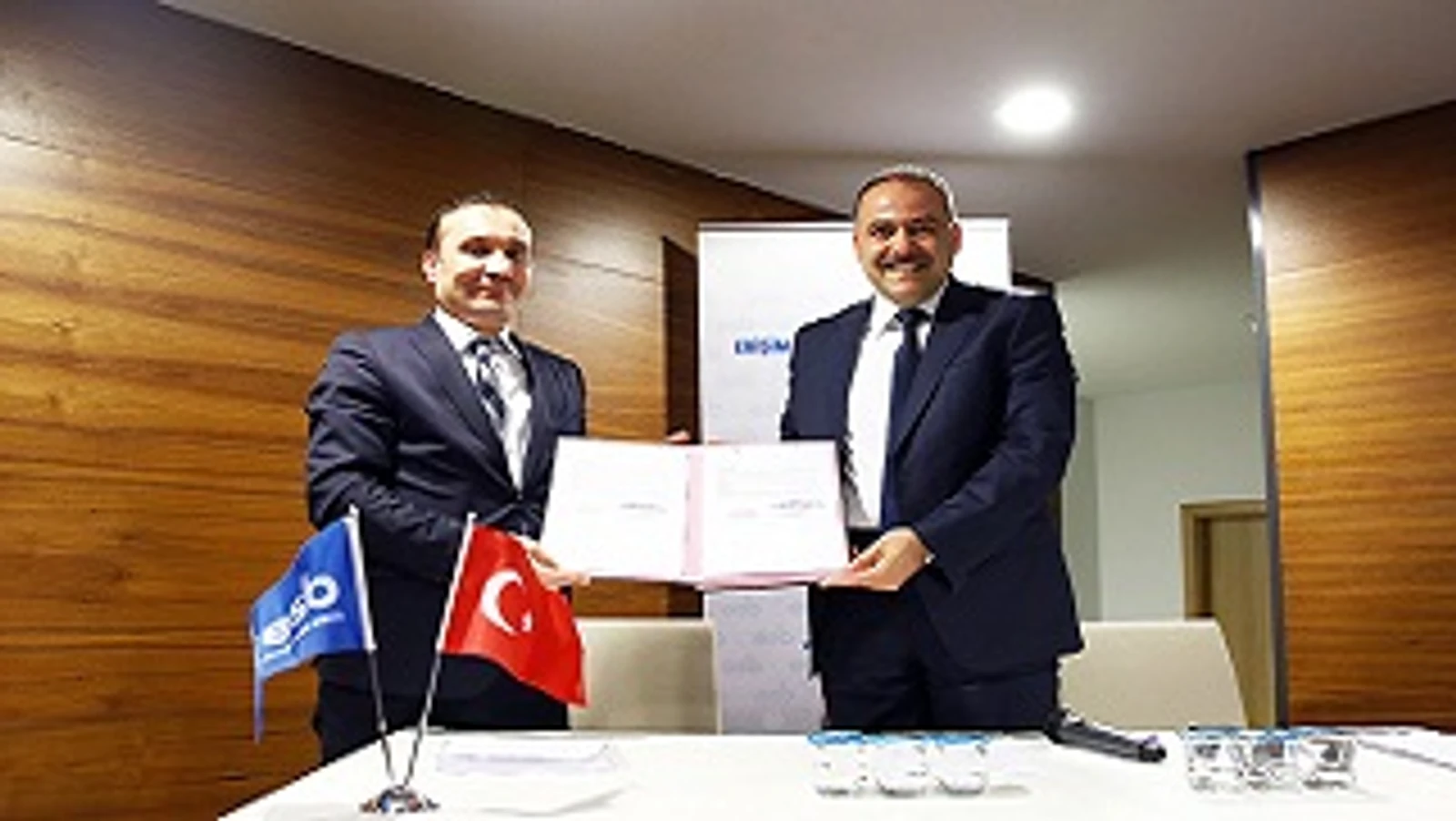
BTK President Dr. Ömer Fatih Sayan attended the Ordinary General Assembly Meeting of the Access Providers Association for 2016. The general assembly, hosted by BTK, was attended by Bülent Kent, General Secretary of the Access Providers Association, BTK Board Member Figen Kılıç, BTK Deputy President Dr. Ahmet KILIÇ, Türksat A.Ş. General Manager Cenk Şen, and members of the Board of Directors of the Access Providers Association.
MOBILE INTERNET SERVICE IS NOW AVAILABLE EVERYWHERE
Stating that access to the internet is undoubtedly one of the most important components of the electronic communications sector, Sayan said: “In our country, both the number of internet subscribers and the number of people benefiting from internet services are steadily increasing. The broadband subscriber count, which was 48.57 million in 2015, reached 62.2 million by the end of 2016 with a 28% increase. With the launch of 4.5G, the number of mobile broadband subscribers increased by 12.6 million to 51.7 million in the last year, while the average monthly usage per subscriber rose by 53% from 1.3 GB to 2 GB. Fixed broadband subscribers, reaching 10.5 million by the end of 2016, saw their average monthly usage increase by 9 GB from 58 GB to 67 GB in the last year. With the widespread adoption of mobile internet, people from all age groups can now access internet services everywhere.”
THE ACCESS PROVIDERS ASSOCIATION IS FULFILLING AN IMPORTANT TASK
Touching upon the increasing importance of protecting children and youth from crimes committed over the internet and harmful content on the internet with its widespread use, Sayan stated that the Access Providers Association, in line with its coordination duties arising from legislation, effectively and beneficially carries out work to inform content and location providers of access blocking decisions and ensure the removal of content from publication. He expressed his belief that the association will continue to strengthen this cooperation in its future work in this area.
UNITY IN THE SECTOR IS ACHIEVED THROUGH ESB - BTK COLLABORATION
Reminding that everyone has responsibilities in line with the development strategies set to achieve our country's 2023 targets, Sayan said, “Acting with this awareness and sense of responsibility, our Institution has regulated certain matters regarding the membership of operators authorized under Internet Service Provider (ISP) Services to the ESB within the framework of the requirement for all authorized internet service providers and other operators providing internet access services under Law No. 5651 to become members of the ESB. Accordingly, ISPs must become members of the ESB, otherwise their authorizations will be revoked. According to the current member list submitted to BTK by the ESB, there are currently 244 ESB members, and there are no non-member ISPs. This is proof that unity and togetherness have been established, and collective work for our country has been ensured.”
SAFE INTERNET CENTER CONTINUES ITS ACTIVITIES
Emphasizing the importance of children and youth not only fully benefiting from the opportunities brought by the internet but also being protected from its harmful content, Sayan said, “In addition to continuing the activities of the complaint center in our Institution, emphasis has been placed on awareness-raising efforts. In this regard, work has also been initiated for the establishment of the help center, the final component of the Safe Internet Center. The primary aim of our Safe Internet Center will be to support children's and youth's inclinations towards internet technologies while encouraging them to use this technology with a sense of responsibility and awareness. In international examples, Safe Internet Centers continue their work through initiatives from many civil society organizations, the private sector, and internet actors. Unfortunately, in our country, apart from public institutions and especially BTK, the inclination towards this issue is not at the desired level. From now on, we desire to focus on awareness-raising efforts and collaboration in a multi-stakeholder environment. In particular, important tasks fall to all of us in awareness-raising efforts. We must simultaneously support children and youth in fully benefiting from internet technologies while carrying out activities to protect them from harmful publications. In every regard, we should present the opportunities of technology to our children and make them love technology. In this era of information and technology, where Industry 4.0, the Internet of Things, artificial intelligence, and innovation are being discussed, it is unthinkable for our children and youth to stay away from technology.”
WE SHOULD NOT ONLY USE TECHNOLOGY BUT ALSO PRODUCE IT
Noting that we are entering a phase where 5G and beyond, which will dominate the 2020s as the mobile generation, will bring to life applications intolerant of latency, and vertical industries such as urbanism and automotive built on smart cities and smart transportation systems platforms will expand their market potential, Sayan said:
“Work on 5G, whose industrial standards are still being defined, is progressing rapidly on the international stage. In this sense, it is of great importance for our country to participate in this race and be one of the first countries in the world to experience 5G. We must prepare for the coming years in areas such as the Internet of Things, robots, virtual reality, augmented reality, artificial intelligence, drones, 3D printers, and blockchain. In the midst of this unimaginable rapid progress in informatics, we must be part of it; we should not only use these technologies but produce them.
At this point, our principle is to support and develop domestic production. At the stage we have reached, while many countries are launching networks operating at 4G levels, we have worked on an infrastructure targeting 5G and beyond levels, based primarily on the guidance and strong will of our President, our Prime Minister, and our Minister. Our country has been only a user of technology up to 3G technology. When the stage of holding the frequency tender for 4G technology was reached, discussions began on what could be done for our country to become a producer of technology and to be one of the first countries to adopt 5G.
DEVELOPMENT NOT BASED ON DOMESTIC PRODUCTION IS NOT SUSTAINABLE
Expressing that they have a major goal of entering 5G in 2020 together with developed countries, that they have established the 5GTR Forum in this direction, and that they have created a synergy by bringing together producer companies, businesses, public institutions, universities, and NGOs, Sayan said, “However, how we transition to 5G is an even more important issue. We see that development not based on domestic production, both in software and hardware, is not sustainable, and moreover, not secure. The possibility of constant sabotage with software and materials that do not belong to you is evident. The world today talks about, knows, and even experiences how many smart devices, from TVs to mobile phones, from cars to refrigerators, can be used against their owners and for unintended purposes when necessary, and can be turned into attackers by being hacked.”
THERE IS A GREAT OPPORTUNITY AHEAD OF US
Explaining that there is a great opportunity ahead, Sayan said, “We are approaching a turning point where we can close the gap with technologically advanced countries. We must broaden our horizons in every field, see our real competitors, and act in the most strategic way. By combining our diligence, intellect, and aesthetic perception, we can seize this opportunity presented by fate.”
Sayan concluded his speech by congratulating the ESB on its Ordinary General Assembly and thanking all stakeholders who work together and contribute to the development of the sector.